

How I Eat at 68 — Simple, Sustainable, and Strong
There are endless opinions about how to eat. Blogs. Podcasts. Social media debates. The current Secretary of Health and Human Services is quite opinionated on whole milk and other topics. Advocates of Keto, Intermittent Fasting, Veganism, Carnivore, and everything in between.
It’s no wonder people are confused.
For my health and sanity — to fuel my workouts, support recovery, and age well — I keep it simple. I focus on balancing the three macronutrients and eating mostly whole foods.
That’s it.
What Is a Macronutrient?
Macronutrients are the three things that fuel your workouts, repair your muscles, and keep your systems running.
Protein
Carbohydrates
Fat
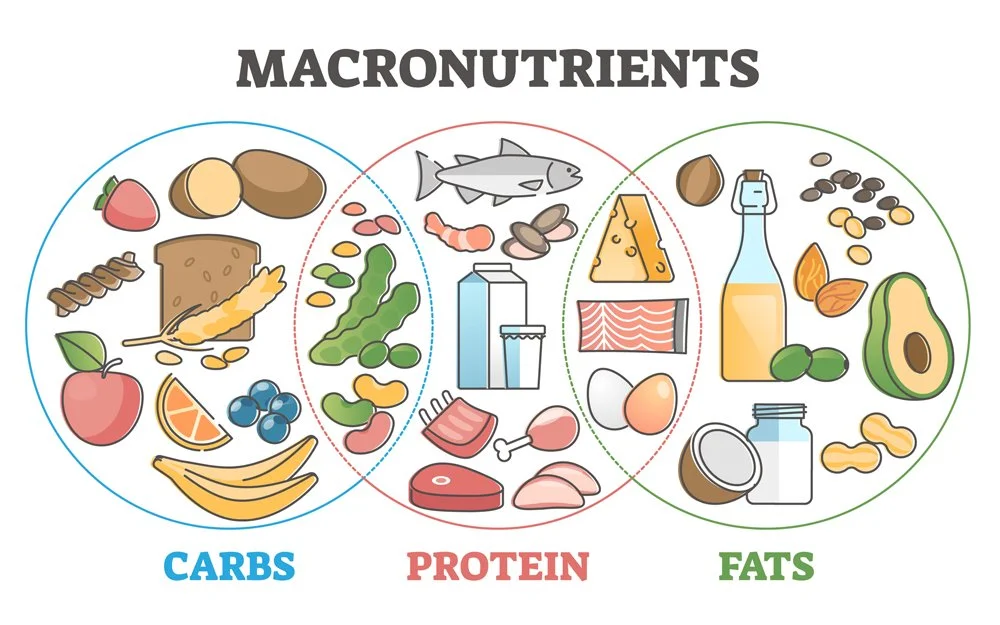
They provide energy and support tissue repair, hormone production, brain function, and growth.
Each plays a role. None are bad guys.
But each comes in different varieties and forms, some of which are less healthy than others.
How Much Protein Do You Actually Need?
The Recommended Dietary Allowance (RDA) for protein is:
0.8 grams per kilogram of bodyweight
Or about 0.36 grams per pound
That works out to roughly:
46 grams per day for the average woman
56 grams per day for the average man
But that number is a minimum to prevent deficiency, not necessarily optimal — especially as we age.
Research from USDA scientist Shanon Casperson suggests older adults may benefit from about:
0.54 grams per pound of bodyweight per day
If you weigh 130 pounds:
The RDA = 46.8 grams
The higher aging recommendation = 70.2 grams
That’s a significant difference.
If you strength train — and I hope you do — protein becomes even more important to repair and rebuild muscle tissue.
Research also shows there appears to be a threshold of about 25–30 grams of protein per meal to effectively stimulate muscle protein synthesis.
A practical approach:
Include protein at every meal and snack.
Aim for at least 0.5 grams per pound of bodyweight daily.
Strength-trained individuals and older folks may benefit from slightly more.
High-quality protein sources include:
Meat and fish
Eggs
Dairy
Tofu
Quinoa
Hemp seeds
Buckwheat
Rice and beans
What About Carbohydrates?
Carbohydrates are not the enemy.
General dietary guidance suggests carbs make up 45–65% of total calories. But rather than calculate percentages, I suggest something simpler:
Fill half your plate with vegetables and fruit.
Healthy carbohydrate sources include:
Whole, fresh, or frozen fruits and vegetables
Whole grains
Beans and lentils
These foods are rich in vitamins, minerals, and — importantly — fiber.
It’s wise to limit:
Added sugars
Refined grains
Highly processed snack foods
And when I say limit, I don’t mean eliminate.
I keep dark chocolate in the house. I enjoy a square or two. If I want a cookie, I’ll pair it with fruit and protein.
Refined carbohydrates are typically less filling and easier to overeat. Pairing them with protein helps stabilize blood sugar and make you feel full sooner.
Fiber: The Missing Piece
Fiber deserves its own spotlight.
Fiber is the part of plant foods your body doesn’t fully digest. It travels through your digestive system largely intact — and that’s a good thing.
There are two main types:
Soluble Fiber
Dissolves in water and slows digestion.
May help lower cholesterol and improve blood sugar control.
Found in:
Oats
Beans
Lentils
Apples
Citrus fruits
Carrots
Avocados
Insoluble Fiber
Does not dissolve in water.
Adds bulk to stool and supports regularity.
Found in:
Whole grains
Bran
Cauliflower
Green beans
Nuts
Potatoes
Why Fiber Matters
Adequate fiber intake:
Promotes regular bowel movements
Supports gut health
Helps lower cholesterol
Improves blood sugar control
Increases fullness and supports weight stability
Daily recommendations:
Women over 50: 21 grams
Women 50 or younger: 25 grams
Men over 50: 30 grams
Men 50 or younger: 38 grams
If you focus on whole foods — especially plants — fiber tends to take care of itself.
Are Fats Good or Bad?
Neither.
Fats are essential. Your body needs them for:
Energy
Hormone production
Nutrient absorption
Organ protection
The key is choosing wisely.
Saturated Fats
Found in:
Butter
Cheese
Cream
Fatty meats
Many processed foods
Current guidelines suggest limiting saturated fat to less than 10% of total calories.
Unsaturated Fats
Generally considered beneficial — especially when they replace saturated fats.
Found in:
Avocados
Nuts and seeds
Olive oil and other plant oils
Salmon, mackerel, herring, trout
Coconut oil is higher in saturated fat, despite popular marketing.
I’ll be honest: if I want butter on bread, I have it. Just not daily, and not in excess.
Portion control works.
So What Should You Actually Eat?
Here’s how I keep it simple:
I don’t count calories.
I don’t measure.
I don’t obsess.
I build my plate like this:
½ vegetables and fruit
¼ to ⅓ protein
The remainder whole grains or additional vegetables
And if I want a treat, I have a small portion and enjoy.
And if I want a treat, I have a small portion and enjoy.
That pattern naturally provides:
Adequate protein
Healthy fats
Fiber
Micronutrients
Satisfying volume
At 68, paired with strength training and cardio, this way of eating keeps me at the weight I was at 30. I feel energized during the day. I sleep well at night.
No drama.
No extremes.
No food fear.
Just consistency.
Simplicity Works
Healthy eating doesn’t need to be ideological.
It doesn’t require eliminating entire food groups or chasing trends.
Focus on:
Enough protein
Plenty of plants
Adequate fiber
Mostly unsaturated fats
Limited processed foods
Reasonable portions
Simple.
Repeatable.
Sustainable.
The real question isn’t, “What diet should I follow?”
It’s:
What way of eating can you repeat consistently for the next 20 years?
That’s the one that will serve you.