

What Nine Years of Strength Coaching Has Taught Me About Confidence
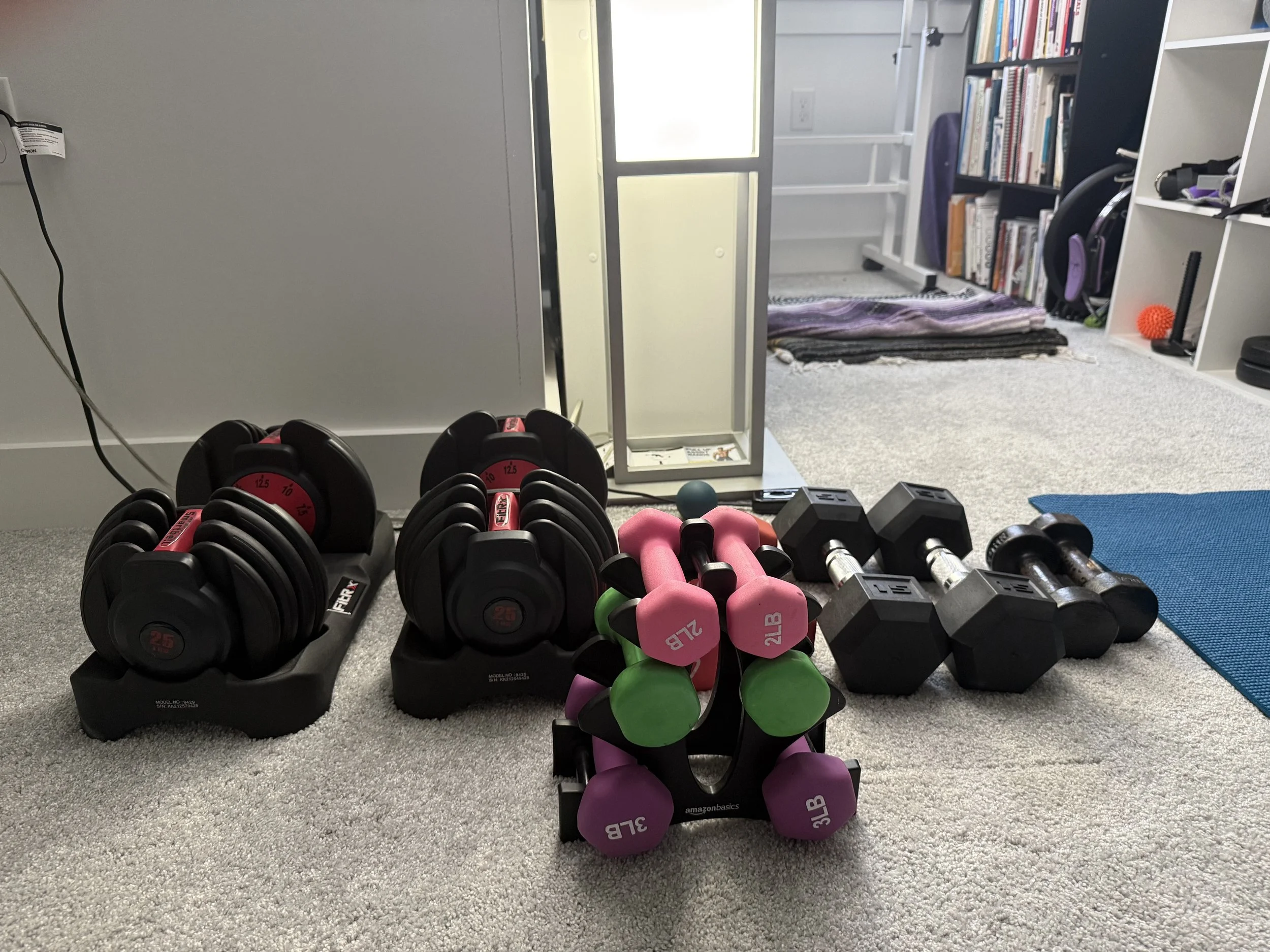
My collection
Many people have heard that strength matters.
But strength training can feel like it is meant for the Arnold Schwarzeneggers of the world, not the average person.
You may picture a sweaty gym filled with metal and grunts.
You may envision bulky muscles and a blocky torso.
Worse, you may fear injuring a muscle or damaging a joint.
You may not see yourself.
You may already have an injury or not have worked out in a dog’s age. You may have knee or back pain. You may wonder whether you are too old at 69, 72, or 85. (I’ve worked with new clients up to age 95.)
So how do you begin, and how does this relate to confidence?
When you approach strength training, even with a coach like me, you will have questions.
You’re likely to start with low confidence in your abilities.
I promise you that confidence can grow with each lift.
Start where you are.
I overhead press 15 pounds. I’ll most likely start you with 1–5 pounds, depending on your experience and current strength. I started with 5 pounds thirty years ago, and it took time to build up to 15.
My confidence grew as I:
· Learned the movement
· Chose the appropriate weight and volume
· Focused on form
· Increased the challenge gradually
· Breathed
· Allowed myself time to adapt
Confidence grows with the weight
Every day, I have clients who go from:
· 1 pound to 2
· 3 to 5
· 5 to 8
· 8 to 10
· And onward
Progressively increasing weight is key to building both strength and confidence.
I see it on clients’ faces, and it shows up in their notes to me as they prove to themselves they can reach the next level.
This is my guide for when you are ready: When you can perform 12 reps with good form, breathing naturally, and you clearly have more capacity, you are likely ready to add weight. You will feel it when you are ready.
In the long run, lifting the same 3-pound dumbbells won’t build strength.
When I say strength growth, I do not mean bulk. Building significant muscle mass requires deliberate training. This is especially true for women. You don’t accidentally wake up one morning looking like Arnold Schwarzenegger because you progressed from 5-pound dumbbells to 8.
Challenge is not the same as unsafe
Strength training should be challenging, but challenging and unsafe are not the same thing.
When I’m ready to increase the weight, I choose the next sensible load. I don’t make a huge jump just to prove I can.
If you progress while paying attention to your body’s signals, you build capability.
And with capability comes confidence.
The goal isn’t to avoid challenge.
The goal is to build your capacity for it.
The truth I’m training for is that strength builds confidence.