

Rule #1: You Are the Boss.
Rule #2: There is only one rule.
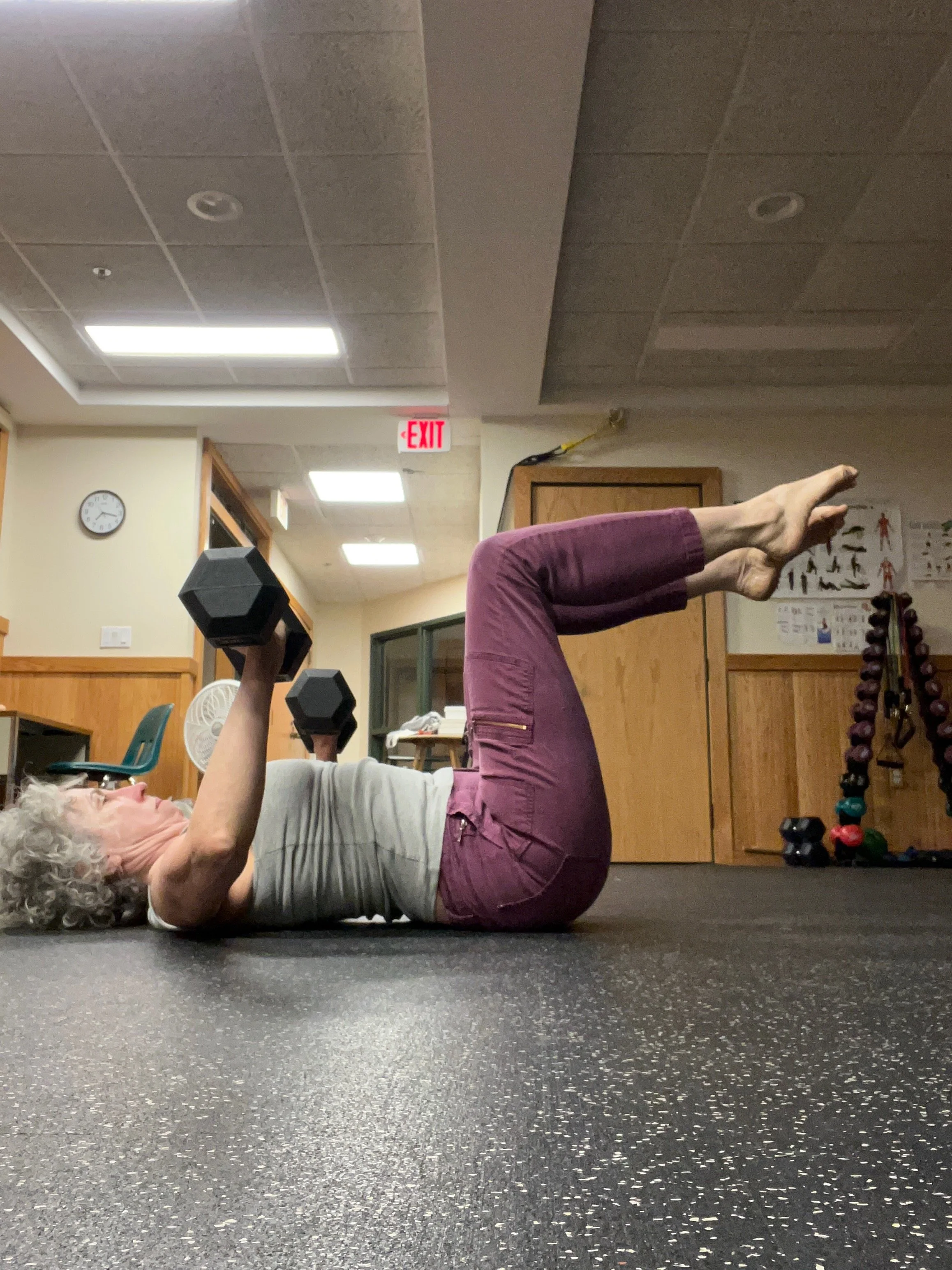
Selfie by Andrea
Strength training isn’t one-size-fits-all. Your body, your experience, your injuries, your life—all influence how you approach it. If you're not already tuned into your body, lifting weights is one of the best ways to start learning. Progress in strength training comes when you listen and challenge yourself strategically. It is a Masterclass in You!
Here are 8 ways to safely and effectively progress your strength training, no matter your age or experience level.
1. Set Your Intention
Commit to strength training for life.
Choose a realistic routine you can sustain.
Make a backup plan for chaotic weeks.
Understand your "why": fight sarcopenia, improve bone density, reduce joint pain, feel empowered.
Track how your body changes—energy, muscle tone, posture, even how your clothes fit.
2. Vary Your Movements
Avoid getting stuck doing the same exercises. Even if you love the chest press, switch it up occasionally with flys or incline pushups. Variety helps prevent injury and boredom while encouraging the recruitment of different muscles.
3. Use Progressive Overload
Strength grows with challenge. Here’s how to increase intensity:
Add weight (increase 5-10% when ready).
Add reps or sets.
Decrease rest between sets.
Switch tools: bands, weights, bodyweight variations.
4. Change Your Tempo
Slowing down or speeding up reps forces your muscles to adapt. Try a 3-second lowering phase with a 1-second lift. Isometric holds (pausing mid-movement) also build strength and control.
5. Train for Power
As we age, power declines faster than strength. Combat this with explosive movements:
Squat down slow, stand quickly.
Add light hops or jumps if safe for your joints.
6. Choose the Right Rep Range
8–12 reps: balanced strength + muscle gains.
12–15+: muscular endurance.
4–6: raw strength (advanced lifters).
When you can do 12 reps easily, increase the load.
7. Adjust Rest Times
More rest = better recovery. Less rest = more intensity. Adjust based on your energy and goals.
8. Try Drop Sets (Advanced Technique)
Lift to failure, reduce the weight, repeat. Do this 2–3 times with minimal rest. Not for beginners, but effective when you're ready to challenge your limits.
Final Thoughts
You don’t need to be perfect—just consistent. Progress doesn’t always mean lifting heavier. It might mean learning your limits, recovering smarter, or getting better at listening to your body. Strength is personal, powerful, and possible at any age.
I design custom programs to suit your individual needs. Message me at andrea@mighty.fit if you are curious.