

A Time of Change: A Time to Change
12 Outdated Fitness Ideas to Retire
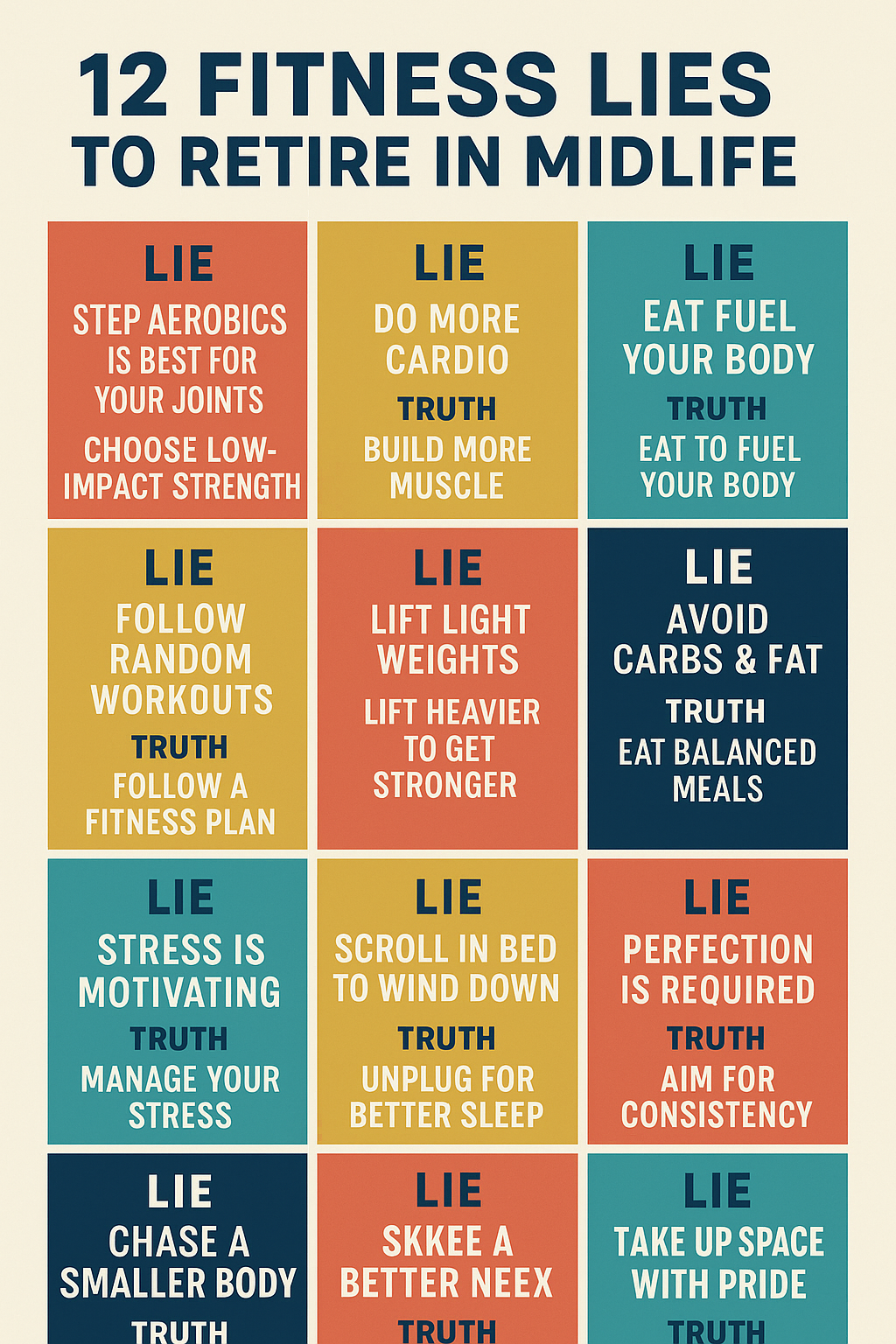
Your Body Has Changed. Your Strategy Should Too.
Your joints have stories to tell. Your hormones don’t follow the same script they used to. You may still feel 35 in your mind—but your nervous system might be stuck in fight-or-flight from two decades of go-go-go.
It’s become easier to get injured, harder to recover, and more frustrating to lose weight. Are we doomed to slow down and weaken with age—or is there another way?
Think of your body like an older iPhone. It still works great—but you can’t run 35 apps at once and expect it to last the day. You need to manage your energy differently, close mental tabs, and prioritize your recovery.
What Is the Alternative?
Find Cardio That Works Today
Cardio improves your heart, lungs, brain, mood, sleep, and even memory. But hours of treadmill time won’t make you “skinny.” That’s an outdated myth. Muscle is what fuels your metabolism.
Instead:
· Do what you enjoy: dance, hike, cycle, brisk walks, rucking, swimming, rowing.
· The CDC recommends 150 minutes of moderate-intensity or 75 minutes of vigorous-intensity activity per week.
· Aiming for 30 minutes a day is a great goal.
· If you’re walking a lot during daily life, those steps count.
· 10,000 steps? That number was invented by a Japanese pedometer ad in the 1960s—the character for “10,000” looks like a person walking. Most studies now suggest that 4,000–6,000 steps per day significantly reduces your mortality risk.
Strength Train 2–3x Per Week
Here’s the truth that rarely gets said out loud:
If you don’t use your muscles, you’ll lose them.
· After 30, you lose 3–5% of muscle mass per decade.
· After 50, that can rise to 1% per year—unless you fight back.
· Menopause and andropause accelerate the decline.
The good news? Your body is remarkably responsive—even after 40, 50, 60, or 70+.
What counts as strength training?
· Bodyweight (squats, push-ups)
· Resistance bands
· Dumbbells or kettlebells
· TRX or cable machines
· Water bottles, backpacks—whatever adds challenge
And yes—you need more than 3 lb weights.
Unless you’re rehabbing, Barbie weights won’t build strength or preserve bone.
Here’s how to build safely:
1. Choose a weight you can lift for 8–10 reps.
2. Perform 3 sets of each movement.
3. When you can do 12 reps with ease, go up in weight.
Why Strength Training?
1. Muscle is your metabolic engine. It burns calories even at rest and improves insulin sensitivity.
2. It protects joints, bones, posture, and confidence.
3. It’s the best prevention and treatment for osteopenia and osteoporosis.
o One study showed that postmenopausal women who lifted weights twice a week increased their bone density and decreased the frequency of falls.
Prioritize Mobility and Recovery
Most injuries happen when you ignore mobility—or push through pain. Functional movement patterns, including hinge, squat, push, pull, and rotation, are essential for daily life and longevity.
Your nervous system matters:
· Chronic stress raises cortisol.
· Cortisol promotes fat storage and burns muscle.
· It interferes with sleep, recovery, and even memory.
· You can literally train your body not to heal if you never calm down.
Recovery ideas:
· Active recovery days: stretching, walking, mobility flows.
· Deep breathing: 4-7-8 breath or box breathing.
· Nervous system resets: tai chi, meditation, grounding, yoga nidra.
· Take a rest day every week. Let your body rebuild.
Fuel Your Life With Real Food
"Eat less, move more" is a trap for people over 40.
Under-eating slows your metabolism.
Your body thinks you’re in danger and reacts by:
· Burning muscle
· Hoarding fat
· Spiking cortisol
· Tanking your energy
Most people who come to me aren't overeating—they're under-eating protein and healthy fats. When we correct that, weight loss happens naturally.
Key Nutritional Shifts:
· Eat protein at every meal (30g+ is ideal)
· Include healthy fats: avocado, nuts, olive oil, fatty fish
· Enjoy whole carbs: veggies, fruits, legumes, grains
· Ditch perfection. Aim for patterns, not punishment.
· Hydrate! Dehydration mimics hunger, cramps your workouts, and dulls your mind.
Sleep Is Your Superpower
Lack of sleep:
· Increases ghrelin (hunger hormone)
· Decreases leptin (satiety hormone)
· Spikes cortisol
· Wrecks your workouts
· Increases fat storage
Good sleep does more than rest your mind—it helps you build strength, maintain bone density, and regulate blood sugar.
Your best evening plan?
· Screens off an hour before bed
· Light a candle, play soft music
· Read, stretch, breathe, or take a bath
· No alcohol or heavy food late at night
Love Yourself Now—Invest in Your Future
What you do in your 60s will determine what you’re capable of in your 80s and 90s.
One missed workout doesn’t matter.
One missed decade does.
12 Updated Fitness Principles to Embrace
Find cardio you enjoy — 3–6x/week
Strength train — 2–3x/week
Build a doable, personal fitness strategy
Add joy: a coach, a buddy, or a class
Commit to consistency
Rest and recover with intention
Take one full rest day a week
Eat protein, carbs, fats — at every meal
Limit processed foods, alcohol & smoking
Calm your nervous system
Prioritize sleep
Reward yourself (but not with self-sabotage)
Final Thoughts:
This is not about getting back to your “old body.”
It’s about owning your current body—and giving it what it needs to thrive.
Change isn’t just possible—it’s essential.