

The Activity Trap: Why Moving More Doesn’t Always Make You Stronger
You walk.
You run.
You stay active.
But somehow you still don’t feel stronger.
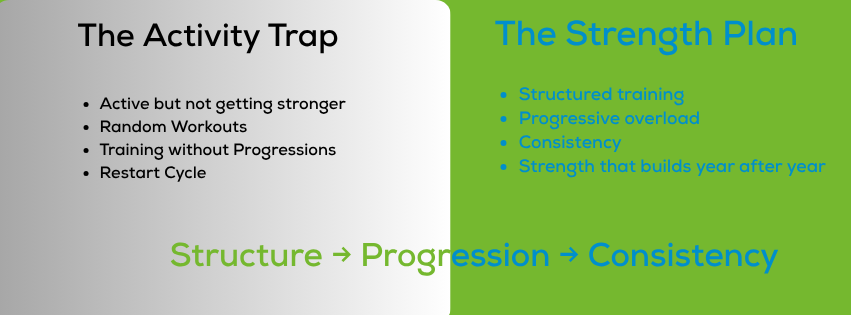
If that sounds familiar, you may be stuck in what I call the Activity Trap.
I was there for years.
Andrea on Canva
Walking and running strengthen the legs.
You might work your core occasionally.
Maybe you throw in some triceps dips to keep your upper arms firm.
And yet your strength doesn’t really accumulate.
That’s because building strength requires something different.
It requires a strength path:
• Structure
• Progression
• Consistency
Activity is good.
Structured strength training is what protects your body long-term.
My Own Activity Trap
I was active for years.
If you asked me to take a walk, I was there. When I lived in New York City, I commuted on a folding bike. I grabbed yoga classes, swam laps, and took “bust-your-whatever” classes at the gym.
I even had a personal trainer.
But I only saw her once a week and rarely trained on my own.
My strength gains were limited by my lack of structure.
Embracing Strength Training
I became a personal trainer the year I turned sixty because I wanted to age better myself — and help others do the same.
I fell in love with strength training.
Building on what I learned from my wonderful New York trainer, I went deeper into how muscles work and how to train them effectively.
Along the way, I trained in several movement disciplines, including:
• Tai Chi
• TRX
• Mat Pilates
• Yoga
Each added tools and perspective.
Working with clients quickly made something obvious:
One size does not fit all.
Each person needs exercises adapted to their body, their history, and their goals.
Recovery matters too. I take it as seriously as lifting.
Over the past nine years, the system I’ve developed keeps coming back to three core principles:
Structure. Progression. Consistency.
Structure
Structure simply means having a plan.
Instead of doing random workouts, strength training follows a schedule that allows muscles to work and recover.
Most people benefit from training major muscle groups two to three times per week, allowing roughly 48 hours of recovery between harder sessions.
You might do:
• 2–3 full-body workouts per week
or
• 4–6 split sessions focusing on different areas
The exact format matters less than having a clear plan.
Without structure, most people end up doing a little of everything and progressing in nothing.
Progression
Progression is the part that many people miss.
Someone might do triceps kickbacks with 2-pound dumbbells for years. That might maintain tone, but it won’t build meaningful strength.
To build strength, we need to gradually increase the amount we lift over time. This is true for everyone, and it will not suddenly turn you into a bodybuilder. (I knew Joe Manganiello before the muscles — trust me.)
To get stronger, the body must gradually handle more challenge over time.
That can mean:
• heavier weights
• more repetitions and sets
• more demanding variations
A simple guideline:
If you can complete 12 repetitions with good form, you’re probably ready to increase the load.
Resistance bands are great for beginners. Increasing tension by shortening the band makes the movement harder.
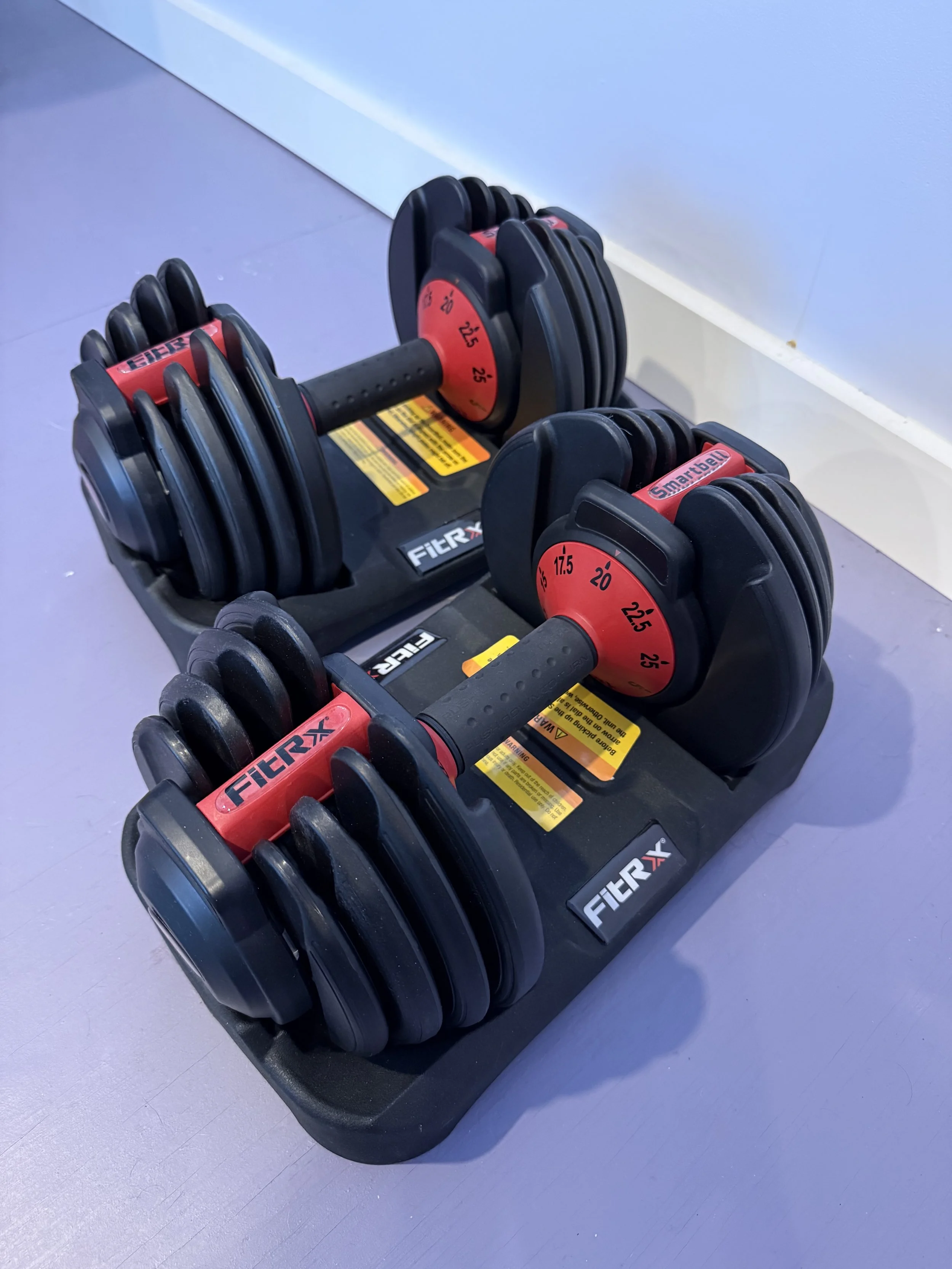
At home, adjustable dumbbells can help. I use a set that ranges from 5 to 25 pounds each.
Progression doesn’t turn people into bodybuilders.
It simply tells the body: adapt and get stronger.
Consistency Follows
The number one problem people report to me is consistency.
Ironically, consistency becomes much easier once structure and progression are in place.
People are most inconsistent when they don’t have a plan.
Every workout becomes a decision.
“What should I do today?”
That mental load drains motivation.
When I train, I already know the session.
There’s variety inside the program, but the intention is clear.
I just show up and do the work.
The Payoff
When you move from the Activity Trap to a Strength Path, everything changes.
You build strength in your muscles and your bones.
You support your joints.
You improve posture.
You increase your range of motion.
And you prepare your body for the activities you actually love.
Walking, hiking, gardening, swimming, playing with your kids or grandkids.
Activity feels better when your body is strong enough to support it.
If you feel ready to get started, let’s get on a strength plan call.