

I get asked about this a lot.
If you’ve seen my videos, you’ve probably noticed that at 68 I get up and down from the floor with ease — sometimes using my hands, sometimes without. That didn’t happen by accident. It’s something I’ve practiced and maintained.
And you can too.
This is not about showing off or being fancy. It’s about keeping a practical life skill that supports strength, confidence, and independence.
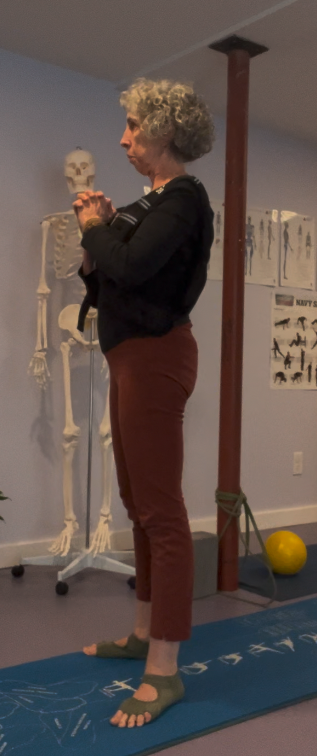
Andrea standing Hands Free Selfie
Why This Matters
Being able to lower yourself to the floor and get back up helps with:
Leg strength
Core strength
Balance
Coordination
Mobility
Confidence in your body
Everyday function
It’s one of the clearest examples of fitness that carries into real life.
The Part People Quietly Think About
Let’s be honest.
Many people wonder:
What if I fall someday?
Would I be able to get back up?
Am I losing strength?
Can I still trust my body?
Those are fair questions.
Practicing floor transitions can help remove fear and replace it with confidence. If life ever puts you on the floor unexpectedly, you’ll have more options.
Start Where You Are
You do not need to start hands-free.
You do not need to be graceful.
You do not need to compare yourself to anyone else.
Start where you are today and use the support you need.
That is how progress happens.
If Getting Down Feels Difficult
Use a sturdy couch, chair, or table nearby.
Place your hands on the support.
Lower to one knee.
Bring the second knee down.
Sit back carefully.
Use your hands and the floor to lower further if needed.
If your knees are tender, place a folded blanket or cushion underneath.
Even practicing this stage is valuable.
If Getting Up Feels Difficult
Simply reverse the process.
Roll to your side or press up with your hands.
Come to seated.
Bring one foot forward.
Use your support.
Rise to kneeling.
Stand tall.
Pause whenever needed. There is no rush.
If You Need Your Hands
Good.
Using your hands is not failure. Using support is smart training.
Try:
Method 1: Kneeling Descent
Lower to one knee
Hands to floor
Bring second knee down
Sit or lie down
Reverse to stand
Method 2: Squat to Hands
Squat as low as comfortable
Reach hands to floor
Lower knees down
Sit
If You Already Do This Easily
Keep practicing.
Use it or lose it applies here.
You can challenge yourself with:
Slower lowers
Controlled stands
No-hand transitions
Squat to sit to squat
Plank down and stand up patterns
The Confidence Benefit
Every successful rep teaches your body and mind:
I’m staying ready.
That matters more than people realize.
Final Thought
The goal is not to impress anyone.
The goal is to stay capable.
To stay strong.
To trust your body.
Start where you are. Build from there. Hold on to everything you’ve got.